Sparklers, Shaky Photos and the Smell of Damp Grass: Bonfire Night, Then and Now
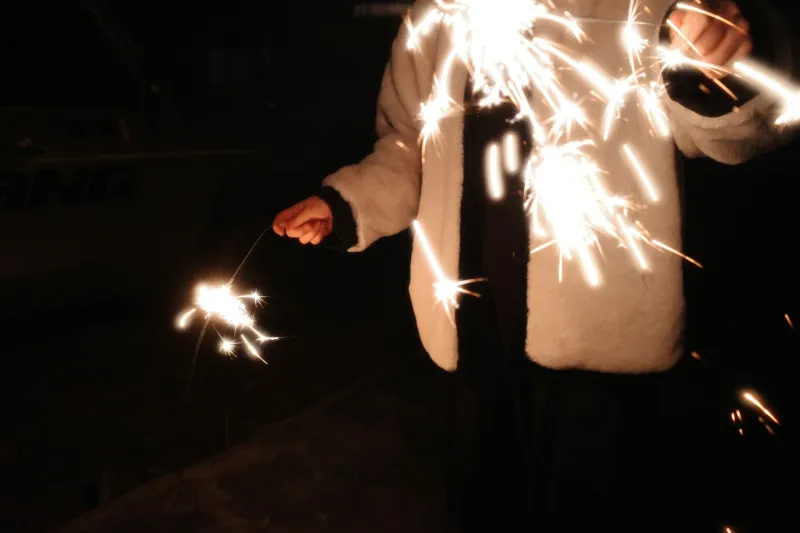
There is a particular orange glow in old Bonfire Night photographs. It is not quite firelight and not quite streetlight, and it catches everyone mid-blink. Here at Hoban 2005, we have spent the past few weeks sorting through a shoebox of reader submissions from 5 November 2005 — blurry sparkler trails, damp coats, park crowds in hats, and the occasional thumb over the lens. The plan was simple: use those pictures to compare Bonfire Night then with Bonfire Night in 2026. What we found was less about fireworks and more about how we gather, how we record things, and what we have quietly stopped doing.
The Back-Garden Bonfire That Wouldn’t Light
Many of the 2005 photos come from gardens. Not grand gardens, either — the kind with a washing line, a wonky shed and a patch of grass that turned to mud the moment anyone stood on it. Reader Julie from Stockport sent us three pictures of her dad prodding a bonfire with a garden fork while everyone else stood back and pretended not to be nervous. In one shot, a box of fireworks sits on a plastic garden chair. In another, a bucket of water has been placed so far from the fire that it is almost decorative.
That was the ritual for plenty of families in 2005: a few rockets in a milk bottle, a packet of sparklers, gloves that never quite matched, and a Catherine wheel nailed to the fence with more optimism than skill. The photographs are full of the same details — orange plastic torches, coats zipped to the chin, a tray of baked potatoes going cold indoors because nobody wanted to miss the first rocket. You can almost smell the damp grass and the sulphur.
By 2026, the back-garden display has become rarer. Councils and safety campaigns have spent years persuading us that organised displays are safer, and many families have listened. The result is not necessarily worse, but it is different. The fireworks are bigger, the crowds are larger, and the whole evening is often planned around a ticket, a train journey and a meeting point. The garden bonfire still happens, of course, but it feels more like a deliberate act of nostalgia than the default option.
Park Displays and the Sound of the Crowd
The park photos from 2005 have a wonderful chaos about them. There is always a funfair in the background, usually a waltzer with a generator humming nearby. There is a burger van, a queue for the toilet block, and at least one child on someone’s shoulders wearing a hat that keeps slipping over their eyes. Reader Anwar from Leeds sent a photo of his local display with a radio roadshow stage lit in blue. He remembers the presenter shouting the countdown and the crowd joining in, but he cannot remember the song that was playing. Nobody can. That is the nature of these things.
What strikes me most is the lack of phones. In the 2005 pictures, people are looking up. Not at screens — at the sky. There are a few early digital cameras and the odd disposable, but most people are simply standing there with their heads back, mouths open. The crowd sounds are not captured in the photos, but you can imagine them: the oohs, the aahs, the delayed bang, the toddler crying somewhere near the ice-cream van.
In 2026, the same park display is likely to be lit by a hundred phone screens as well as rockets. We photograph the first burst, film the finale, and send clips to family members who stayed home. There is nothing wrong with that — the Hoban 2005 archive would be much poorer without reader photos — but it does change the rhythm of the evening. People watch through a screen for a moment, then look up, then check the screen again. The experience is shared twice: once in the park and once in a group chat.
Safety Warnings, Then and Now
Bonfire Night 2005 came with a familiar chorus of warnings. The fire service told us to keep fireworks in a closed tin and never return to a lit one. The RSPCA asked us to keep pets indoors. The NHS reminded us that sparklers burn at high temperatures and should not be handed to very young children. Schools sent pupils home with safety leaflets, and local newspapers ran the same headline they had run for years: remember, remember, be careful.
The warnings in 2026 are similar, but the delivery has changed. Councils use social media, school apps and text alerts. Display organisers talk about quieter fireworks for sensitive ears and pets. Air quality is part of the conversation now, too, along with the cost of putting on a large public event. Some towns have moved to laser shows or drone displays instead of fireworks. Others have kept the bonfire but made the whole evening ticket-only, with bag checks at the gate.
Is that a loss? Not exactly. The safety message has clearly worked. Fewer garden accidents, fewer frightened animals, fewer fires started by a stray rocket. But something has been lost in the translation from leaflet to app: the shared, slightly haphazard feeling of a neighbourhood doing something together. In 2005, the safety advice arrived in the same envelope as the school newsletter. In 2026, it arrives as a notification while you are buying tickets online.
What the Photos Can’t Show
Old photographs are good at faces and fireworks. They are less good at atmosphere. They cannot show the cold that seeped through your shoes, the smell of onions from the burger stall, or the way the whole street seemed to empty into the park at the same time. They cannot show the front-room parties afterwards, with coats piled on the sofa and someone making tea for everyone.
That is what many readers have written to us about. The photographs are a prompt, not the whole story. A picture of a sparkler becomes a memory of a grandmother warning you to hold it at arm’s length. A blurry park shot becomes a story about losing your sister for ten minutes and finding her at the candyfloss van. These are the details that make the Hoban 2005 archive feel alive.
A Warm Glow, Not a Verdict
So what has changed between 2005 and 2026? Bonfire Night is safer, more organised and more photographed. It is also more expensive, more spread out, and more likely to involve a screen. The backyard bonfire has not disappeared, but it has become a conscious choice rather than a default. The park display is bigger, but the crowd is often watching through a phone.
The things that have stayed the same are the important ones: the cold, the community, the smell of smoke in your coat the next morning. If you have photos from Bonfire Night 2005 — or stories about a bonfire that would not light, a rocket that went sideways, or a sparkler that burned your glove — we would love to add them to the archive. The Hoban 2005 project is built on exactly this kind of memory: ordinary evenings, kept alive by people who were there.