Mud, Mugs and Memory: The Sunday Boot Sale Still Wins in 2026
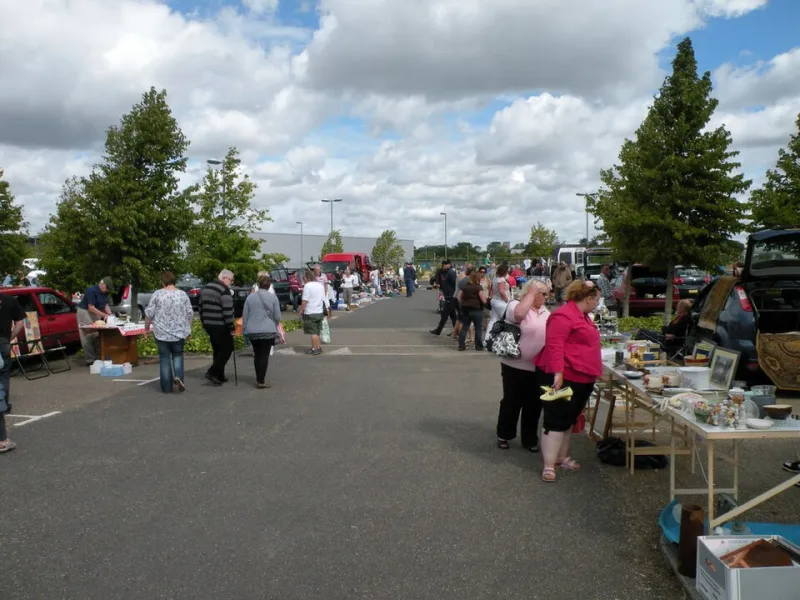
Photo: Keith Edkins , CC BY-SA 2.0, via Wikimedia Commons
The car boot sale is not a shop. It is a temporary village built out of hatchbacks, pasting tables and plastic crates. On a Sunday morning in 2026, you will find them in school playgrounds, farmers' fields and recreation grounds across the UK. The air smells of bacon rolls and damp grass. Somebody is selling a bread maker without the instructions. Somebody else is selling a box of CDs for a pound each, and you are already crouching down to have a look.
For anyone who grew up in Britain from 2005 onwards, the boot sale is also a strange kind of time machine. The things we once bought new, used and then forgot are now arriving back in our lives as second-hand finds. School annuals, digital cameras, mismatched crockery, compilation albums and the occasional exercise bike: these are not ancient artefacts. They are the recent past, laid out on a tarpaulin and priced to clear.
Why the boot sale is Britain's living archive
A museum is curated. A car boot sale is not. That is exactly what makes it useful. You can learn a lot about a country from what it is willing to sell on a Sunday morning. In 2005, the stalls were full of CD singles and DVD box sets. By 2010, there were more digital cameras and phone chargers. In 2026, you are just as likely to see old games consoles, boxed cookbooks and bags of school uniform. The stock changes, but the format stays the same.
For this site, the boot sale is a natural fit. Hoban 2005 is a personal archive of stories, photos and updates from 2005 onwards, and the average boot sale is a jumble sale version of the same idea. Every table tells a small story. The mug with a faded holiday resort logo. The school annual with a name written inside in careful handwriting. The digital camera that still has a memory card full of somebody else's birthday party. You are not just buying objects. You are buying the end of someone else's chapter.
What to bring (and what to leave in the car)
A good boot sale trip starts with sensible kit. Bring cash, because card readers are still not guaranteed in a muddy field. Bring a sturdy bag or a shopping trolley if you are serious. Wear shoes you do not mind ruining. A flask is a good idea, although the burger van will usually win. Leave the dog at home if the site looks busy, and leave your expectations of tidiness at the gate.
It also helps to have a loose plan. The early birds arrive before the sellers have finished unpacking. The bargain hunters arrive around mid-morning, when prices start to soften. The late arrivals get the leftovers and the best stories. If you are looking for something specific, ask. Stallholders often have boxes under the table that they have not bothered to display. If you are browsing, do a first lap without buying anything. This is the boot sale equivalent of reading the menu.
The finds that follow you home
My own boot sale history is a parade of small, unnecessary objects. In 2005, I bought a stack of CD singles for 50p each and felt like a music journalist. In 2007, I found a box of school annuals from the 1990s and 2000s, including one that still had a crossword half finished. In 2009, I bought a digital camera for a fiver. It worked perfectly, apart from the battery cover, and it came with a memory card containing seventeen photos of a cat. I have never met the cat. I have thought about the cat more than is reasonable.
Mismatched crockery is another classic. A single patterned plate. A gravy boat without a jug. A mug that says 'World's Best Dad' even though you are not a dad. These things cost almost nothing and they carry a strange amount of domestic atmosphere. In 2026, with so much of life happening on screens, there is something grounding about eating your breakfast from a plate that has already had a long and mysterious life elsewhere.
A 2026 field guide: timing, haggling and the bacon roll
Start with the weather. A dry forecast brings out more sellers and more buyers. Arrive early if you want the good stuff, but do not be afraid to arrive late if you want the cheap stuff. Haggling is fine, but keep it friendly. 'Would you take two pounds for both?' is a perfectly good sentence. 'That's rubbish' is not. Remember that most sellers are not professionals. They are people clearing out a loft, a garage or a relative's house.
Carry small change. A seller with a queue and no change is a seller who will remember you badly. If you buy something electrical, ask if it works. If you buy something fragile, wrap it in a jumper. If you buy a book, check for inscriptions and pressed flowers. These small traces are often the best part. A boot sale is not just a place to buy things cheaply. It is a place to notice things.
The bacon roll deserves its own paragraph. In 2026, the average car boot sale bacon roll is still a thing of simple, salty glory. It is not a gourmet experience. It is a hot sandwich eaten standing up while balancing a box of records on your hip. That is the correct way to do it.
The keepers: why we still go
There are obvious reasons to visit a car boot sale: thrift, curiosity, the chance of a bargain. But the deeper reason is community. You are in a field with people from your area, buying and selling the ordinary stuff of life. You hear accents and arguments and someone laughing at a lamp. You see a child spend 20p on a toy with more enthusiasm than most adults manage all week. It is slow, messy and human.
In 2026, that matters. We can order almost anything online and have it arrive by tomorrow. The boot sale offers something different: a Sunday morning wander, a conversation with a stranger, a object with a past. It is Britain's nostalgia economy in its purest form, and it is still turning over. The mugs are mismatched, the mud is real, and the next box of memories is just around the corner.